The Headline Is Not a Miniature Article
Why headlines leave detail for the story, and how to read their promise without mistaking compression for a complete account.
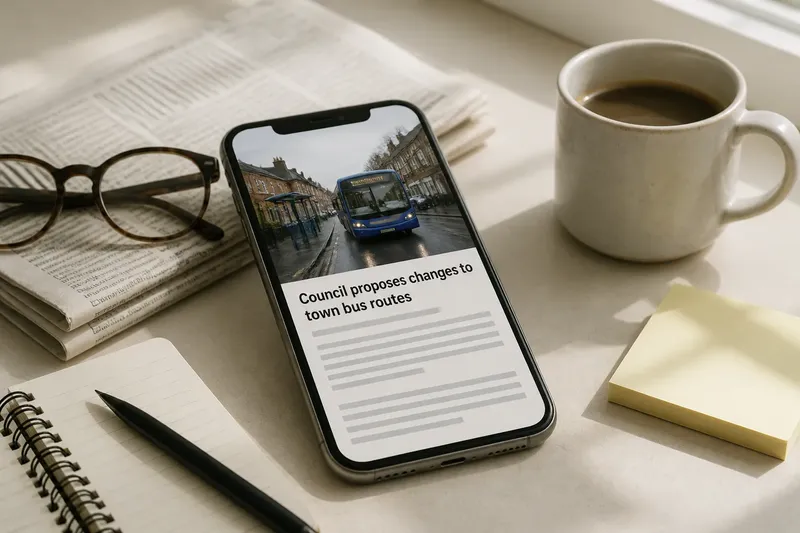
A headline on a phone screen can be the only part of a story a reader sees before deciding whether to open it. That makes the headline feel like a miniature article, but it has a different job: to identify the story’s central point and invite a fair reading of the fuller account.
Confusion starts when readers expect a few words to supply the context, caveats and evidence that belong below. These five myths explain what a headline can reasonably do, where its limits lie, and how to judge the relationship between the label and the reporting.
Myth one: a headline should contain the whole story
A headline is a doorway, not a compressed transcript. It selects the most useful point for a reader to grasp at a glance. The story then supplies the supporting detail: what happened, who says so, what remains uncertain and why the event matters.
That division is practical, not a licence to conceal essential information. A headline should not reverse the story’s meaning or imply a certainty its reporting does not support. But it cannot carry every qualification without becoming hard to read and difficult to scan.
Imagine a council story about a proposed change to bus routes. A headline could say that the council has proposed a route revision, while the article explains which routes may change, when the proposal could take effect and how residents can respond. The expected result is a clear initial signal, followed by detail that lets readers understand the proposal’s reach. Asking the headline to hold all of that would make the distinction between announcement and explanation harder to see.
The useful question is not, “Did the headline tell me everything?” It is, “Did it give me a fair account of the story’s main subject, and does the story deliver the detail needed to understand it?”
Myth two: every headline must answer every question
A headline can identify an event without resolving all the questions a reader might bring to it. The reasons behind a decision, the people affected and the evidence for a claim may require several paragraphs, documents or competing accounts. Their absence from the headline does not automatically make the headline evasive.
There is a difference between an unanswered question that belongs in the article and a missing fact that would change the headline’s meaning. “What happened next?” can be a natural reason to read on. “Was this a proposal or an enacted decision?” is more basic: if the wording blurs that distinction, it risks leaving readers with the wrong impression.
Think of a headline as a signpost rather than a verdict. It can point towards a development; it cannot show the full route, the evidence gathered along it, and every point of dispute at once. Readers should expect the story to answer the questions that its opening raises, while editors should ensure the headline does not imply an answer the reporting has not established.
Myth three: a striking headline must be sensational
Specificity is often more compelling than drama. A headline that names the decision, place or affected group can catch attention because it gives readers something concrete to recognise. A headline built on alarm or sweeping language may attract a glance, yet leave the reader unsure what actually happened.
Consider the difference between “A crisis is coming for local travel” and a more direct description of a proposed change to a particular bus service. The first creates atmosphere but withholds the subject. The second lets a reader decide whether the story is relevant, while leaving room in the article for conditions, responses and implications.
Strong wording still needs restraint. Verbs such as “warns”, “plans”, “rejects” and “confirms” carry different meanings; choosing among them is an editorial judgement, not decoration. A claim that something “will” happen can imply a settled outcome where the story describes only a possibility. The sharper headline is the one whose force matches the reporting.
Not worth the effort: swapping in a more dramatic adjective simply because the plain account feels quiet. If the subject itself is significant, accurate nouns and verbs can do the work. If it is not, verbal fireworks will not supply substance.
Myth four: a headline is a neutral label
Headlines are editorial choices. A story about a public decision might lead with the decision-maker, the people affected, the cost to a service or the uncertainty around implementation. Each angle can be accurate while directing attention towards a different part of the same event.
That does not make every headline equally fair. The choice should reflect the story’s reporting and its most consequential point, rather than a detail selected only because it sounds dramatic. A useful reader can notice the angle without assuming that one line reveals the whole editorial process.
Compare a headline focused on an official’s announcement with one focused on the change residents may face. The first foregrounds who acted; the second foregrounds what may follow. To judge either, check whether the opening paragraphs establish the same central point and whether the rest of the story supports the emphasis. If the headline spotlights a minor detail that the article barely develops, the fit is weak.
Headline framing also matters when stories are encountered outside their original page. A line shared in a message or displayed in a feed may travel without the surrounding article. That makes clear wording especially valuable, but it still does not turn the headline into a complete substitute for the reporting.
Myth five: headline wording is the whole test of accuracy
Accuracy depends on the relationship between headline and story, not on the headline in isolation. A careful line can introduce an article that later explains the limits of its evidence. A seemingly plausible line can mislead if the article supports only a narrower claim or describes a different stage of events.
Read the headline, then check the opening and the passage that carries its central claim. Look for who is making the claim, what evidence is offered, and whether the article distinguishes fact from forecast or allegation. These checks do not require specialist knowledge; they help reveal whether the headline’s promise is being honoured.
For instance, if a headline says a new rule is taking effect, but the story describes a proposal still awaiting a decision, the mismatch is material. If the headline names a proposal and the story explains its unresolved status, the headline may be doing its job even though the final outcome is unknown. The deciding issue is whether the wording matches the stage of events and the account beneath it.
When a headline seems to overreach, look for the precise point of tension rather than dismissing the entire story at once. Is a prediction phrased as a fact? Is a single person’s claim presented as settled? Is an important qualification buried later? Naming the mismatch makes it easier to judge what the article does and does not establish.
What should readers expect from a headline?
Should a headline include every qualification?
No. It should preserve qualifications that materially change the central claim, while leaving supporting context to the story. If a caveat changes “is happening” into “may happen”, the wording should make that uncertainty clear.
Can a question headline be fair?
Yes, if the question reflects a real issue the article addresses and does not insinuate an unsupported answer. Read the story to see whether it examines the question rather than merely using it to suggest suspicion.
Why do headlines differ across platforms?
News outlets may adapt wording to fit a page, app or social feed, where available space and surrounding context differ. The central claim should remain faithful to the reporting, even when the phrasing changes.
What if the article does not support its headline?
Treat the mismatch as a reason to read carefully, identify the claim that lacks support, and check whether the story corrects or qualifies it. If the gap remains, the headline is a poor guide to that account, regardless of how plausible it sounds.
Read the headline as a promise, not a replacement
A headline promises a fair introduction to a story, not the story’s full argument. It should name the central development in language proportionate to the evidence, while the article supplies context, attribution and uncertainty. Readers can judge the promise by checking whether the opening and the reporting beneath it match.
That distinction makes headlines easier to use. Let the line tell you what the story is chiefly about; let the story show you how the newsroom knows, what remains unresolved and whose account is being presented. The headline is brief because its work is focused, not because it contains a smaller version of every paragraph.